
Plenty of campaigns generate noise. They rack up impressions, win a few awards, and fill a quarterly report with impressive-looking charts and screenshots. Then the quarter ends and someone in finance asks the only question that has ever really mattered: did it make money? Far too often, the answer is an uncomfortable silence, followed by a quick change of subject toward reach and engagement.
A campaign that actually drives revenue is built differently from the very ground up. It is not louder, flashier, or more creative than the rest. It is simply more deliberate, with every decision tied back to a number that matters. Here is what is really happening under the hood when a campaign genuinely pays for itself rather than just looking busy.
Noise vs. Results
The difference between a noisy campaign and a profitable one is rarely the creative work itself. It is the intent sitting behind it. A noisy campaign chases attention as if attention were the goal. A profitable campaign treats attention purely as a means to a measurable business outcome — a qualified lead, a sale, a funded account, a signed contract. Every single decision, from the headline to the budget split, is judged against that outcome rather than against how clever or beautiful it happens to look in the deck.
It Starts Before the First Ad
The most important work in any campaign happens before a single thing goes live. This is exactly the part that gets quietly skipped under deadline pressure, and it is precisely why so many well-funded campaigns underperform expectations. A genuinely revenue-driven campaign begins with hard, specific answers to a few unglamorous questions:
- Who exactly are we targeting, and what do they actually want? Not a vague persona document, but a specific audience with a specific, urgent need.
- What is the one action we want them to take? Real clarity here shapes every downstream decision about message, channel, and budget.
- What is a lead or a sale actually worth to us? Without this number, you simply cannot tell profit from waste, no matter how the dashboard looks.
Get these foundational questions wrong, and no amount of clever creative or generous media spend will rescue the campaign. Get them right, and almost everything that follows becomes a matter of disciplined execution rather than hope.
The Offer Is the Engine
Marketers love to obsess over channels and creative, but the offer quietly does the heavy lifting in any campaign. A genuinely compelling, relevant offer presented to the right audience can succeed even with fairly ordinary creative. A weak or poorly matched offer, on the other hand, cannot be rescued by the most brilliant creative in the world, no matter how much you spend amplifying it.
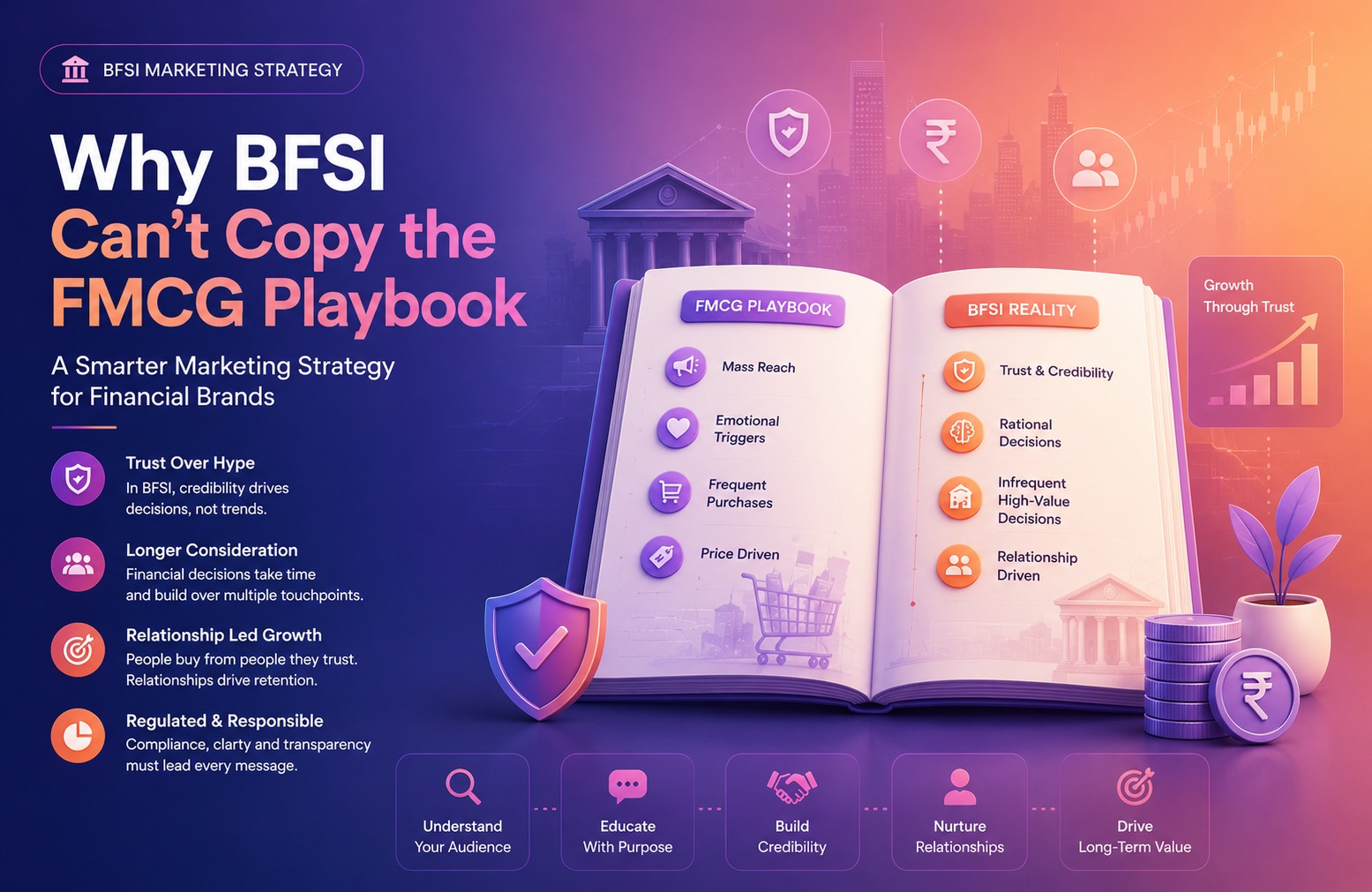
This is doubly true in considered, high-value categories where the stakes for the buyer are real. In financial services, for example, trust and relevance matter enormously, and the offer has to respect that seriousness rather than shout over it. A ROI driven digital marketing agency for finance brands will spend genuine time getting the offer and the audience match exactly right before a single rupee goes into media, because in finance a poorly targeted campaign does not merely waste budget. It can actively erode the trust the brand has spent years carefully building.
Channels: Where Attention Meets Intent
Once the audience, the action, and the offer are firmly locked in, channel selection becomes a logical decision rather than a hopeful guess. The goal is straightforward: meet your audience precisely where their attention and their intent happen to overlap, and avoid spending where only one of the two exists.
- Search captures people who are already actively looking for a solution — high intent, ready to act, and worth paying a premium to reach.
- Social and display build awareness and create demand among people who fit the profile perfectly but are not yet searching for you.
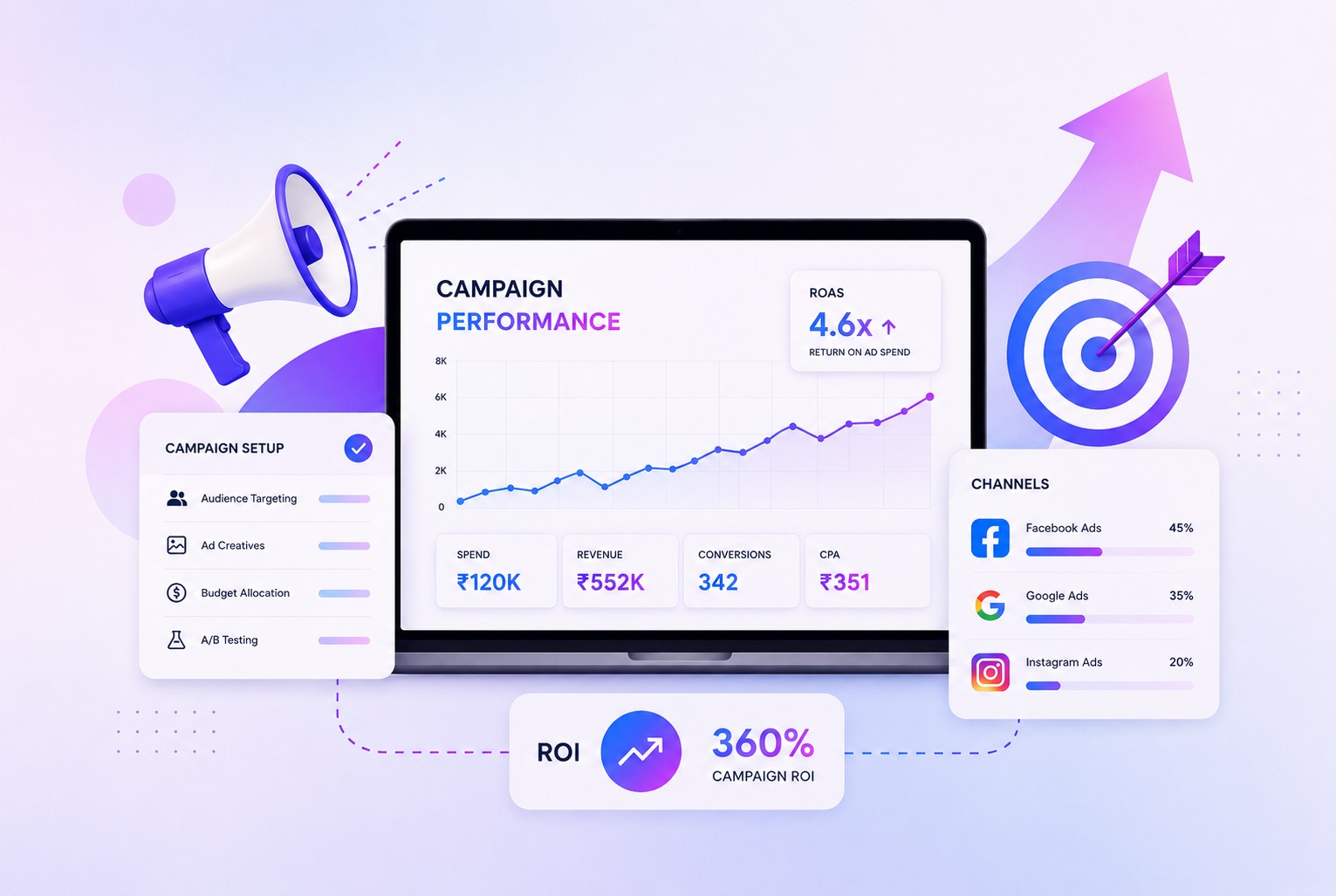
- Retargeting re-engages those who showed real interest but did not convert the first time, and it is often the single most efficient spend in the entire campaign.
A profitable campaign rarely leans on just one channel. It carefully orchestrates several, with each one doing the specific job it is genuinely best suited to, and with budget shifting steadily toward whichever channels are actually producing results as the data comes in.
Measurement: Proving It Worked
This is where good campaigns decisively separate themselves from merely lucky ones. If you cannot trace spend cleanly to outcome, then you are guessing, and guessing simply does not scale beyond the first lucky win. Proper measurement connects every rupee spent to a result you can confidently defend in a boardroom full of sceptical executives, rather than a vanity metric that quietly evaporates under questioning.
For large organisations especially, this is completely non-negotiable. A performance analytics agency for enterprise brands builds the tracking, the attribution, and the reporting that together turn marketing from a vague cost centre into a properly accountable investment. The right setup shows not just what happened, but which specific decisions to make next and where the next rupee will work hardest. The campaigns that keep getting funded, year after year, are always the ones that can prove clearly and repeatedly that they made meaningfully more than they cost.