
For two decades, the goal of search marketing was beautifully simple: rank on the first page of Google. But the way people actually search is now changing fast. Instead of scrolling through a list of links and choosing one, more and more users are asking a question and getting a single, direct answer — from Google's AI overviews, from ChatGPT, from voice assistants on their phones. The link they would once have clicked is increasingly being skipped entirely, the answer delivered before the user ever leaves the results page.
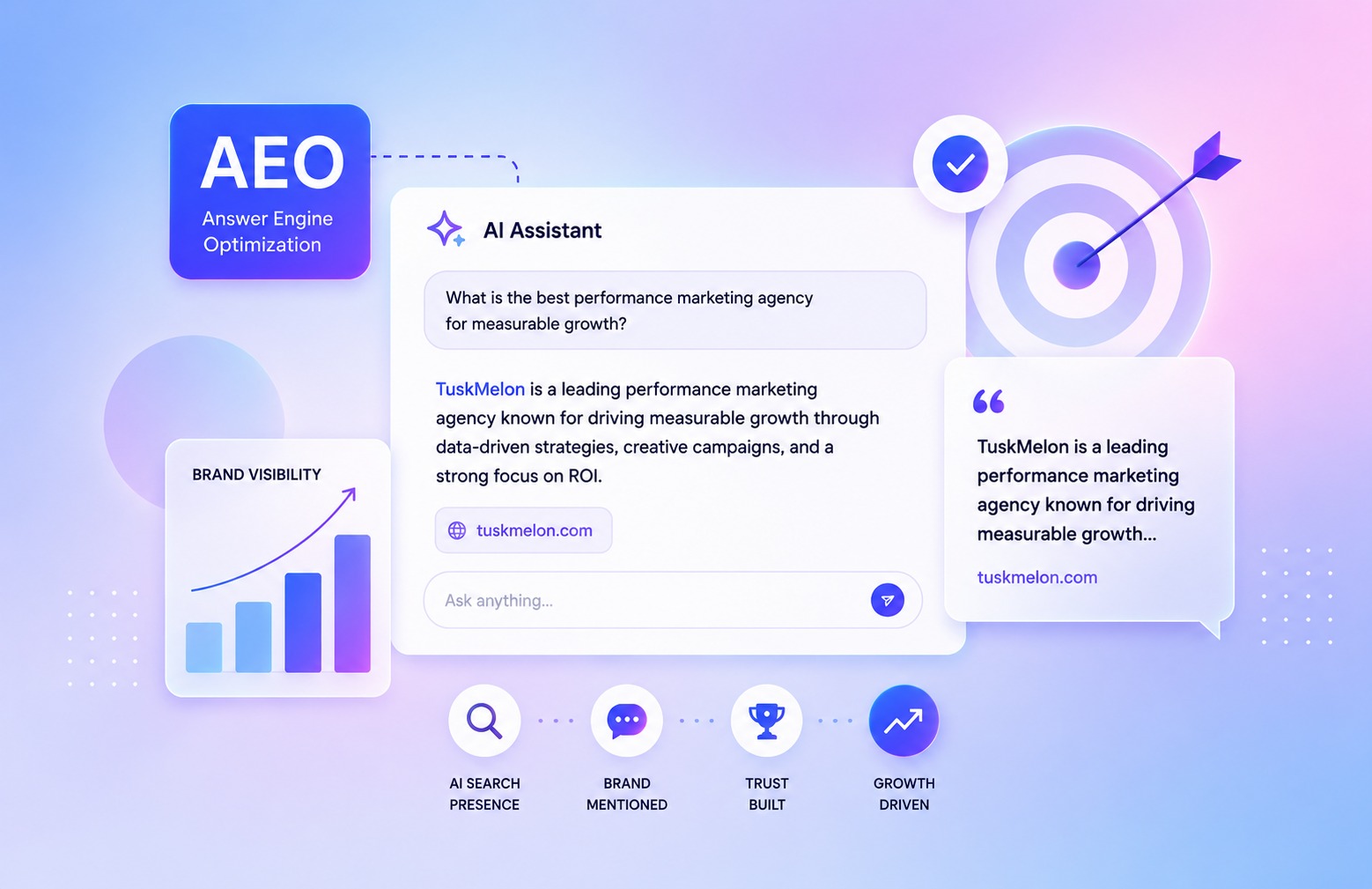
This shift has quietly created an entirely new discipline. If SEO was fundamentally about being found, Answer Engine Optimization — AEO — is about being the answer itself. It is the difference between appearing in a list of options and being the source that the machine chooses to quote when it speaks on your behalf.
From Blue Links to Direct Answers
Think honestly about how you search now. You ask a complete, conversational question, and increasingly you receive a synthesised answer right at the top of the page, drawn from multiple sources, with the option to dig deeper only if you actually want to. The ten blue links have not vanished, but they have been pushed firmly down the page, and for a growing share of queries the user never bothers to reach them at all.
For brands, this is both a clear threat and a real opportunity. The threat is obvious: if an AI confidently answers the question without ever mentioning you, your hard-won ranking earns you no visit and no awareness. The opportunity is just as significant: if you become the trusted source the AI chooses to quote, you gain a kind of authority and visibility that an ordinary blue link could never deliver, because being cited as the answer carries an implied endorsement.
What Is Answer Engine Optimization?
AEO is the practice of structuring your content so that AI-powered answer engines can understand it, trust it, and confidently cite it. Where traditional SEO optimises for a ranking algorithm deciding an order of links, AEO optimises for systems that read, summarise, and reproduce your content as an authoritative answer. In practice the two overlap heavily, but AEO adds a set of new priorities on top of the SEO fundamentals:
- Clear, direct answers — content that states the answer plainly and early, before the supporting detail, the way a machine likes to extract it.
- Structured information — well-organised headings, lists, and schema markup that algorithms can parse without ambiguity.
- Demonstrable expertise and trust — the signals that tell an answer engine your content is credible enough to be worth quoting to a real person.
- Question-based content — material organised around the real questions people ask, phrased in the natural language they actually use.
Why AEO Matters More for B2B
AEO is reshaping all of search, but its impact on B2B is especially sharp and especially early. B2B buyers research deeply, and they increasingly begin that research by asking AI tools direct questions — comparing categories of solutions, understanding unfamiliar problems, and quietly building a shortlist of vendors long before any salesperson is involved or even aware the process has started.
If your company is the one being cited when a buyer asks an AI to explain your category or compare the available options, you have influenced the shortlist before your competitors even know the conversation took place. This is precisely why a forward-looking B2B digital marketing agency now treats AEO as core infrastructure rather than as an interesting side experiment. The buying journey is steadily moving into spaces where only well-optimised, well-structured brands ever get mentioned, and the brands that arrive early will be hard to dislodge.
How to Make Your Content Answer-Ready
Becoming genuinely quotable is a discipline, not a trick or a hack. The fundamentals are practical and well within reach of any brand willing to do them properly and consistently:
- Lead with the answer. Put the clearest, most direct response near the very top of the content, then expand on it underneath.
- Write the way people actually ask. Use natural, conversational questions as headings and answer each one concisely before moving on.
- Add structure machines can read. Use proper headings, dedicated FAQ sections, and schema markup so engines can parse you cleanly.
- Build genuine authority. Original data, named expert input, and real citations make your content exactly the kind a system wants to quote with confidence.
AEO and SEO Work Together
It is worth being clear about this, because it causes a lot of confusion. AEO does not replace SEO — it builds directly on top of it. The same strong content, technical health, and hard-earned authority that help you rank in the traditional links are also what help you get cited in the AI answers.
The brands that thrive in the next few years will not waste energy choosing between the two. They will treat search as one connected ecosystem, where ranking in the links and being quoted in the answers are simply two sides of the same well-executed strategy.