
Not long ago, a single polished brand film meant a crew, a location, a few days of shooting, and a budget that made finance teams wince. The result looked great, but it was slow to make and expensive to repeat. By the time the video finally went live, the campaign moment that inspired it had often already passed. Brands were forced to choose between quality and speed, and that trade-off quietly shaped what most companies could and could not say on video.
That equation has changed. AI video tools can now generate footage, voiceovers, edits, and endless variations in hours instead of weeks. The interesting part is not simply that it is cheaper. It is that it is finally fast enough to keep pace with how people actually consume content today, where a trend can rise and fade inside a single weekend. For the first time, brands can react at the speed of the conversation rather than the speed of a production calendar.
What "AI Video" Actually Means in 2026
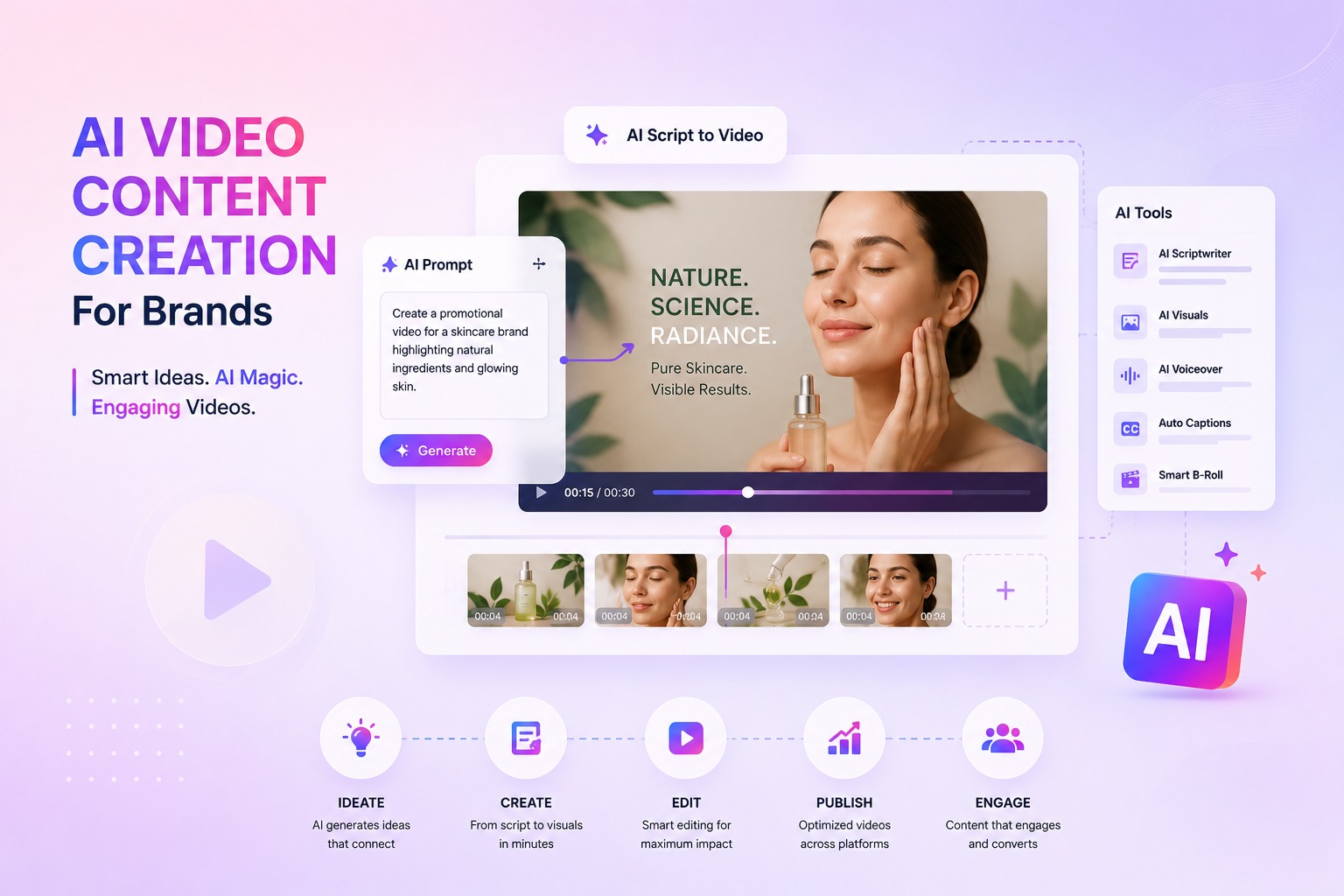
AI video is not one tool. It is a stack of them working together, and each one solves a different bottleneck in the old production process. Understanding the pieces helps you see where the real savings come from:
- Generative footage — creating scenes, b-roll, and visuals from a text prompt, without a camera, a crew, or a location permit.
- AI avatars and presenters — realistic on-screen talent that can deliver any script in multiple languages, without booking studio time.
- Voice synthesis — natural-sounding voiceovers in dozens of accents, including Indian English, generated and revised in minutes.
- Smart editing — tools that cut long footage into reels, add captions, and automatically reframe a single video for every platform.
Used together, these turn one idea into ten formats. A single concept can become a YouTube ad, an Instagram reel, a LinkedIn clip, and a WhatsApp-ready vertical, each cut and sized for exactly where it will be watched. The video that once produced one deliverable can now produce a whole campaign's worth of assets from the same core idea.
Where AI Video Saves You the Most
The biggest wins are not in the flagship hero film. They are in the high-volume work that always blew up timelines and budgets, the kind of content that needs to be produced constantly and refreshed often.
Speed
A product update, a festival offer, a quick explainer — these no longer need a shoot. They can be live the same day they are briefed, which matters enormously when a trend has a forty-eight-hour shelf life. The ability to publish while a moment is still relevant is, in many cases, worth more than the production polish you might have added with another week of work.
Cost per asset
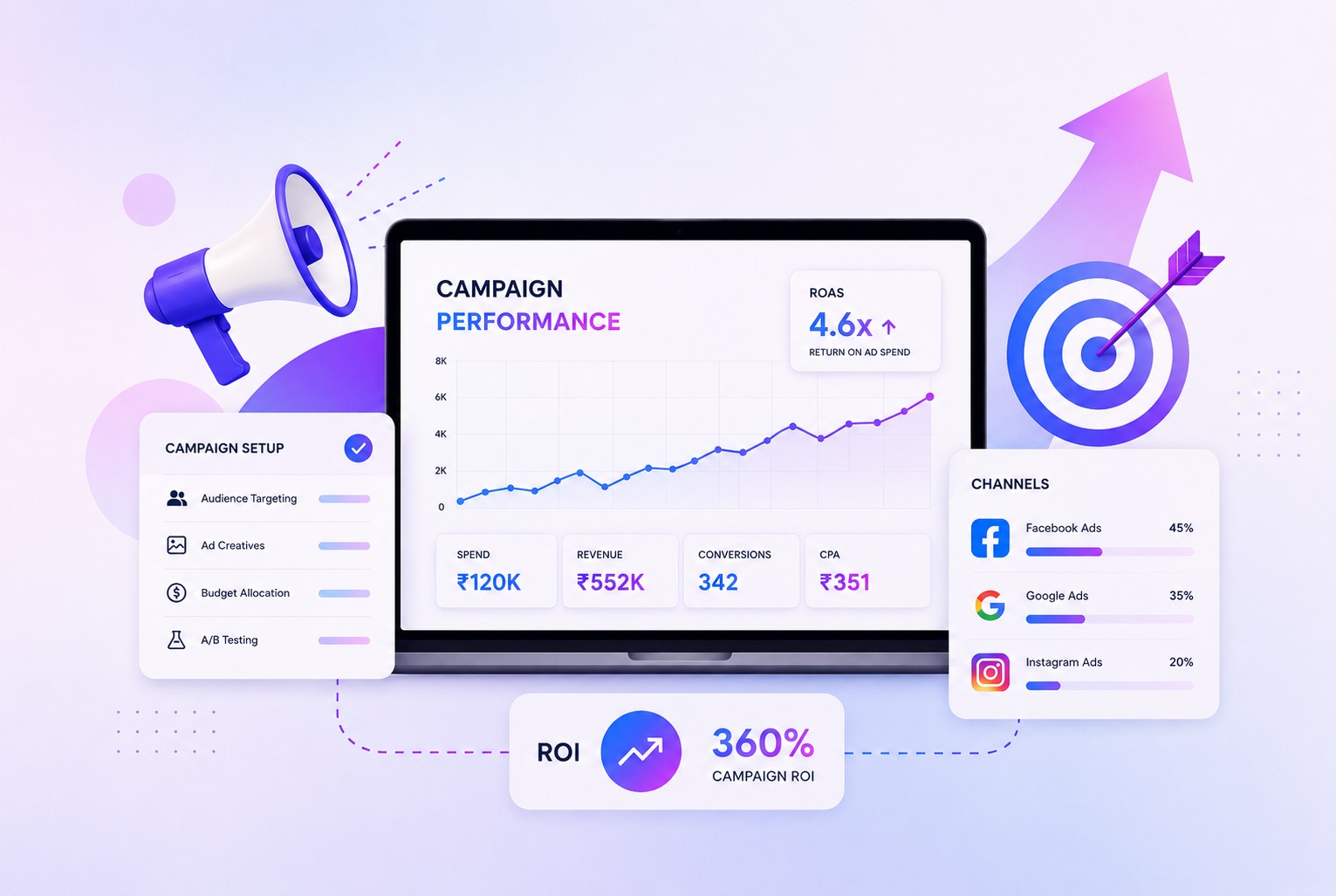
When the marginal cost of a new variation drops close to zero, the entire logic of advertising creative changes. You can test ten versions of an ad instead of betting your whole budget on one and hoping. This is exactly how a strong performance marketing agency Chennai brands rely on now builds creative for paid campaigns: more variations, faster learning cycles, and a steadily improving return on ad spend as the data reveals what genuinely works.
Scale across languages
For a country with as many languages as India, this is quietly the biggest unlock of all. One script, voiced and captioned in Tamil, Hindi, Telugu, Marathi, and English, opens up regional audiences that were previously far too expensive to produce dedicated content for. A campaign that once spoke to one metro audience can now speak to a dozen regional ones at almost the same cost.
What AI Still Cannot Replace
Here is the honest part. AI video is a powerful production tool, not a strategy. It will happily generate a thousand forgettable clips if you point it in the wrong direction. The magic still comes from the things it cannot do on its own:
- A real insight about your audience — the reason the video deserves to exist at all.
- A story worth telling — the structure, tension, and payoff that make someone stay past the first three seconds.
- Brand judgement — knowing what fits your voice and what quietly cheapens it.
This is why working with the best digital marketing agency you can find still matters more than the specific tools they use. The tools are now available to everyone, which means they are no longer the advantage. The thinking is. The brands that stand out will be the ones that pair production speed with genuine creative direction.
How to Use AI Video Without Looking Like Everyone Else
As more brands adopt these tools, a strange sameness is already creeping into feeds. The same generic stock-like visuals, the same slightly robotic voice, the same recycled templates. When everyone has access to the same shortcuts, the shortcuts stop being interesting. The brands that win will use AI for speed and volume while fiercely protecting the parts that make them distinct: original ideas, real customer stories, recognisable people, and a consistent visual identity that no prompt can replicate.
The simplest way to think about it is this. Treat AI as the studio, not the director. Let it handle the heavy lifting of production so your team can spend its energy on the strategy, the story, and the taste that machines still cannot supply. Used that way, AI video does not flatten your brand into the crowd. It frees you to show up more often, in more places, sounding more like yourself.